Apple slices in puff pastry are the perfect way to make a quick, impressive, and delicious dessert. Preparing them does not require much time, and the results will surely delight your loved ones! Delicate, crispy puff pastry, juicy apples, and aromatic cinnamon is a combination that always works. This is a classic recipe that is simple to make, yet fits perfectly for any occasion – from a coffee meeting to a festive dessert after dinner.

Apples in puff pastry is a simple and quick recipe that is perfect as a sweet addition to coffee or a dessert after dinner. The recipe is exceptionally flexible – you can experiment with additions such as cinnamon, nuts, or raisins. Today we will focus on the classic version.
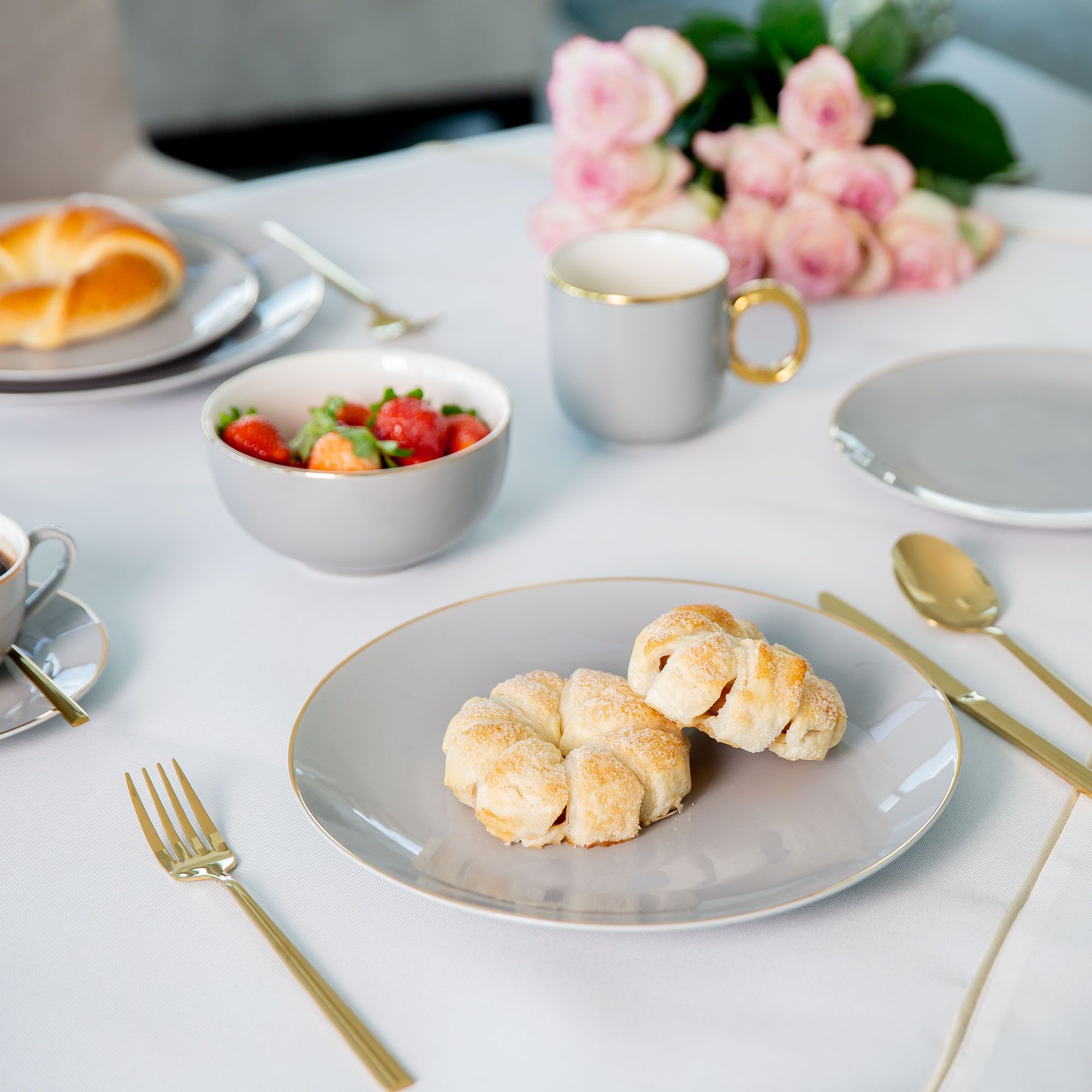
Wrapping apples in puff pastry is a key step that affects the appearance and taste of the dessert. If you want to prepare apple slices in puff pastry, the simplest way is to wrap them with long strips of dough:
The key to perfectly baked apples in puff pastry is following a few simple rules that will guarantee the dessert comes out crispy while the apples remain juicy. Proper preparation of the apples, adjusting the baking time, and the oven temperature are crucial.
1. Choosing the right apples: Hard and slightly tart apples, such as Szara Reneta or Ligol, are ideal for baking. During baking, they maintain their shape and do not fall apart, which makes the dessert look aesthetic while remaining juicy.
2. Temperature and baking time: Apples in puff pastry are best baked at 200°C. This temperature will make the puff pastry golden and crispy, and the apples inside will have the perfect softness. The baking time should be about 15-20 minutes, depending on the thickness of the dough and the size of the apple pieces.
3. Arrangement on the baking sheet: Apples wrapped in puff pastry should be placed on a baking sheet lined with baking paper. It is important to keep spaces between the pieces, as puff pastry grows during baking.
Puff pastry is best baked at a fairly high temperature to achieve a crispy and golden crust. The optimal baking temperature is 200-220°C (top-bottom, without fan). High temperature is key because it allows the dough to rise well and maintain its characteristic layered structure.